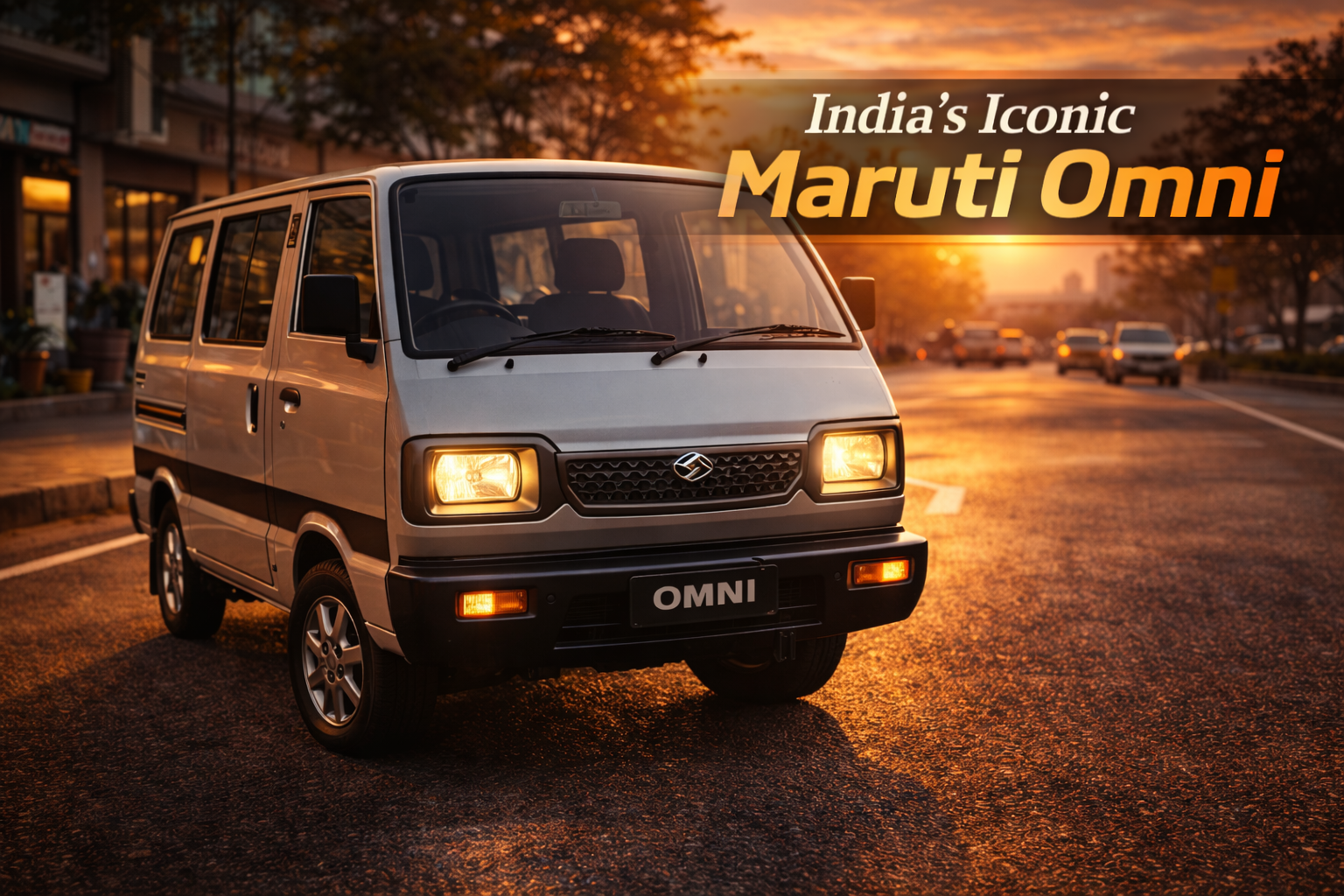
For many Indians, the Maruti Suzuki Omni is not just a vehicle — it’s a memory. From school pickups to family road trips and even small business deliveries, the Omni played a major role in India’s automobile history.
Launched in the mid-1980s by Maruti Suzuki, the Omni quickly became one of the most practical and affordable vehicles on Indian roads. Even though it was discontinued in 2019 due to stricter safety regulations, its legacy still lives on.
Let’s look at five forgotten facts about the Maruti Omni that every Indian will remember.
1. The Maruti Omni Was First Launched in 1984
The journey of the Omni began in 1984, when Maruti Suzuki introduced the van as an affordable multipurpose vehicle for Indian families and small businesses.
At that time, India had very limited options in the van segment. The Omni quickly gained popularity because it offered:
- Compact size
- Simple mechanical design
- Low purchase cost
- Practical seating layout
Over the years, the vehicle became a familiar sight across cities, towns and villages. It served many purposes, from family transport to commercial use.
2. Almost Every School Van in India Was an Maruti Omni
If you grew up in India during the 1990s or early 2000s, chances are you travelled to school in an Omni at least once.
The Maruti Omni became the most common school transport vehicle across the country because of its spacious cabin and affordable maintenance costs.
Drivers could easily fit 6–8 students inside, making it practical for daily school routes. The sliding doors also made entry and exit convenient for children.
For many Indians, the Omni is closely connected with school memories, early morning rides and crowded after-school journeys.
3. The Engine Was Placed Under the Front Seats
One of the most unique design aspects of the Maruti Omni was its engine placement.
Unlike most cars where the engine is under the hood, the Omni’s engine was positioned under the front seats. This unusual layout helped maximize cabin space while keeping the vehicle compact.
Because of this design:
- The front of the van remained short
- More room was available for passengers
- The vehicle maintained a boxy and practical shape
While this layout had its advantages in terms of space, it also became one of the reasons why the Omni struggled to meet modern safety requirements later on.
4. The Omni Was One of India’s Most Affordable Vehicles
For decades, the Omni remained one of the cheapest four-wheelers available in India.
When it was discontinued in 2019, the price of the vehicle was around ₹2.8 lakh to ₹3.2 lakh depending on the variant. This affordability made it extremely popular among:
- Small business owners
- Delivery services
- Taxi operators
- Families in smaller towns
Low maintenance costs and widely available spare parts further added to its appeal. Even today, many old Omni vans are still running on Indian roads.
5. The Omni Served India for More Than 35 Years
Few vehicles in India have enjoyed the kind of longevity that the Omni did.
From 1984 to 2019, the van remained in production for over three decades, making it one of the longest-running models from Maruti Suzuki.
During this time, the Omni was used in many roles, including:
- Family transport vehicle
- School van
- Ambulance
- Delivery van
- Small business transport
However, in 2019, stricter safety rules made it difficult for the vehicle to continue production. New regulations required features like driver airbags, ABS braking system and improved crash safety, which the Omni’s original design could not easily accommodate.
Why the Maruti Omni Still Lives in Indian Memories
Even though the Maruti Suzuki Omni is no longer sold in India, it remains one of the most recognizable vehicles in the country.
Its simple design, affordability and versatility made it a trusted companion for millions of Indians. Whether it was carrying school kids, transporting goods or taking families on road trips, the Omni became a part of everyday life.
Today, many automobile enthusiasts still talk about the possibility of a modern Omni-style vehicle returning in the future, perhaps with improved safety features or even an electric powertrain.
Conclusion
The Maruti Suzuki Omni may have disappeared from showrooms, but its impact on Indian roads is unforgettable. From its 1984 launch to over 35 years of service, the van proved how a simple vehicle could become an essential part of daily life.
For millions of Indians, the Omni is more than just a van — it is a symbol of nostalgia, practicality and affordability.
And that’s exactly why it remains one of the most remembered vehicles in India’s automotive history.